
Freight bookings ran on scattered calls and inboxes. We centralised comms, cut data entry, and tied it into the carriers' own systems.
Context
About the platform
Helps support Logistics Service Providers and their customers. The platform provides a unified view of the supply chain, delivering a simple tracking and management experience to both the users, and their customers.
What is a Booking?
The intent to ship goods from one location to another is recorded in a Booking. It covers details like dimensions, weight, etc along with necessary documentation, preference of port, customs requirements, and special needs like refrigeration, etc.
A Day in the Life of a Logistics Service Provider
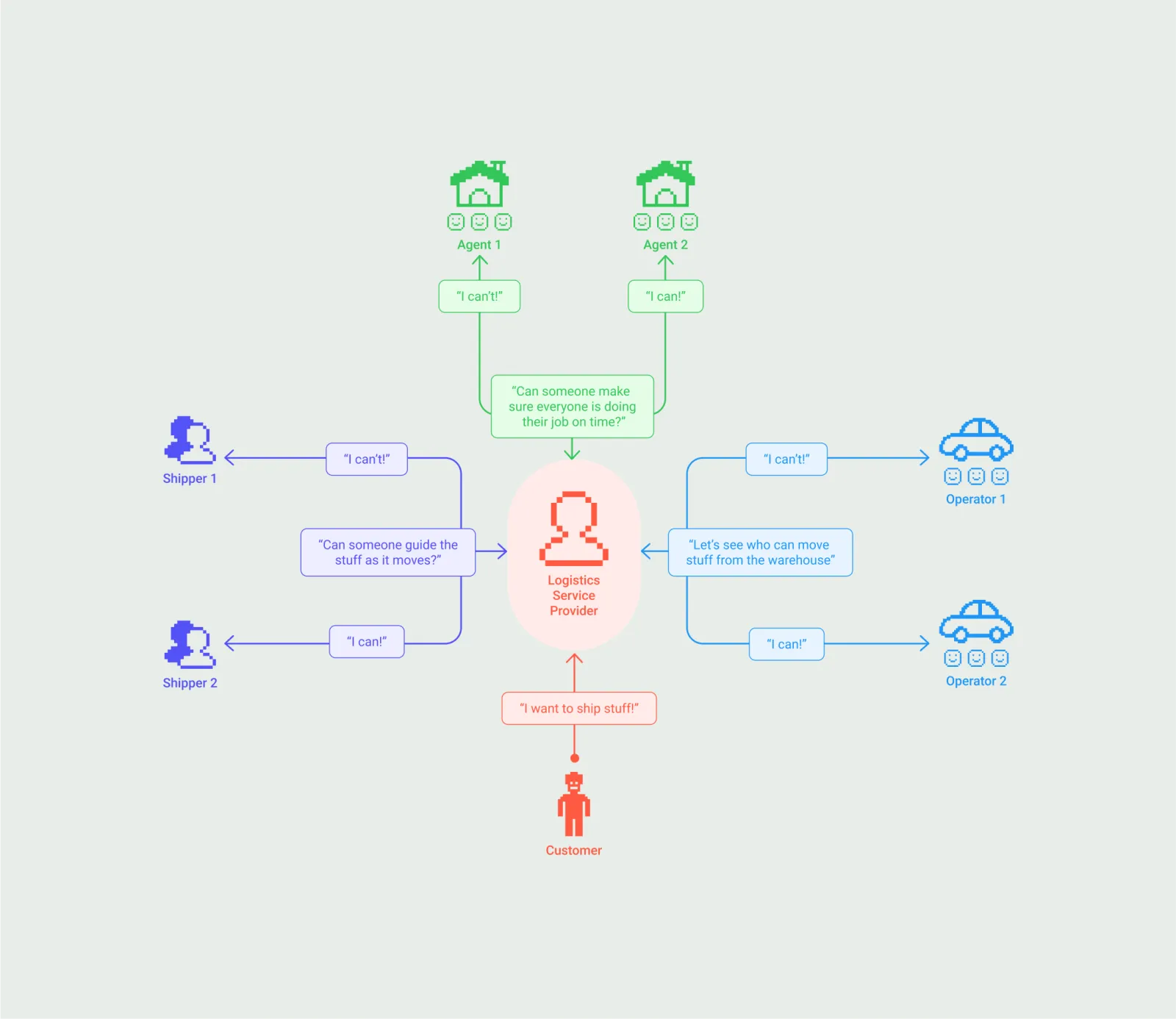
As the main point of contact for customers, port workers, warehouse managers, and more, LSPs and their teams spend their days mired in phone calls, emails and messages. Coordination is their main job, and it is tedious due to lagging adoption of technology in the supply chain industry.
 (view larger)
How can LogixBoard help LSPs manage the communication chaos?
MVP Goals
01 Reduce Data Entry
Centralizing systems should democratize and link related information together, leading to fewer artifacts to manage.
02 Status Clarity
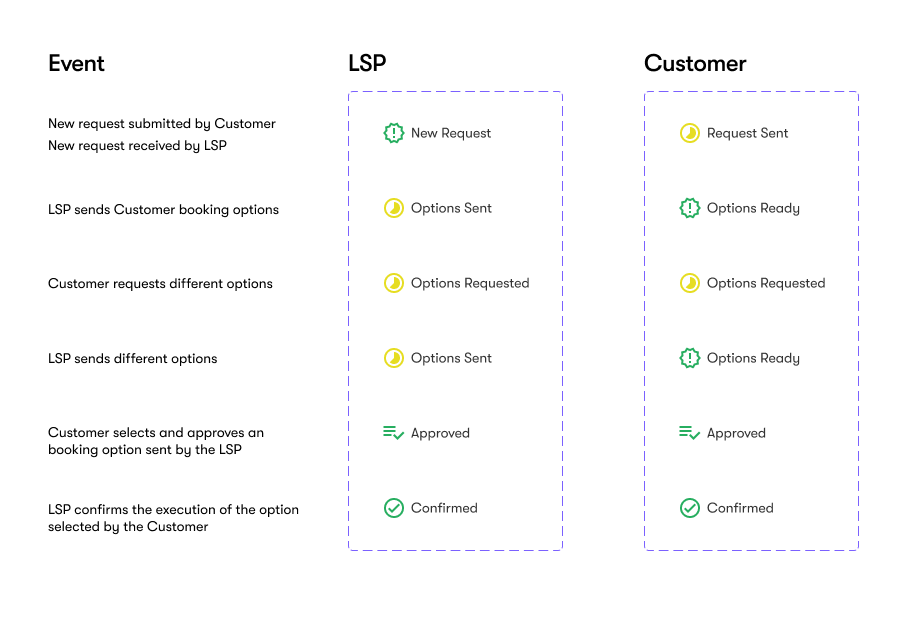
A point of sale order goes through different milestones for the two main user personas, purchaser and LSP. An LSP’s actions updates the milestone of the purchasers’ order, so this had to be crystal clear.
03 Integrations
Cargowise is the leading logistics management platform. Integrating with it and other TMSs increased LogixBoard’s appeal and adoptability.
Phase 01: Status Clarity
Status Clarity
"Where's my stuff?"
If Bookings was built correctly, neither the LSP nor their customer would leave with this question unanswered.
 (view larger)
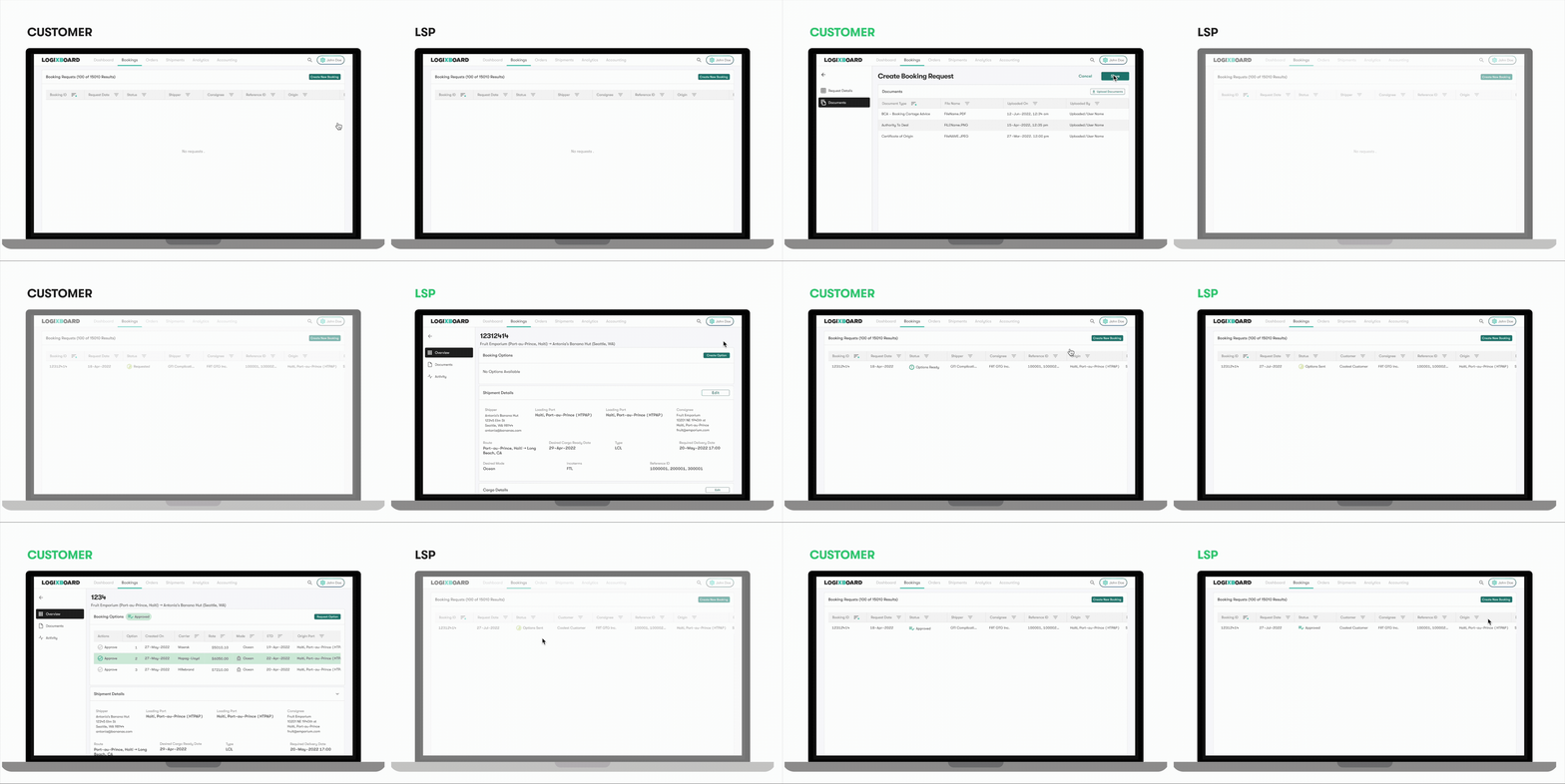
In-app experience
 (view larger)
Phase 01: Post-launch results
Beta Release
LSPs offering booking services and either used a homemade solution, or a TMS solution were recruited for the beta cohort.
6%
Reduction in time to confirm a booking
+18%
Monthly Active Users
$65k
Increase in ARR
Learnings
Staying connected with Bookings users helped define next steps.
01 Approvals
In the beta, ahead of LSP taking action, customers had to approve an option.
This was slowing down LSPs who had long-standing relationships with their customers and were intimately familiar with their preferences
02 External Requests
The beta required a customer of an LSP to make a booking request. Turns out, more often than not, a non-customer party like an Agent, Shipper or Manufacturer was responsible for this request.
03 Horizontal Growth
Before bookings can be requested, customers had to place orders with manufacturers/suppliers. This preceding step included all the details necessary for an LSP to complete a booking, which meant it was crucial to reduce data entry. What else could we do to provide some relief?
Phase 02: Reduce Data Entry
Workshop
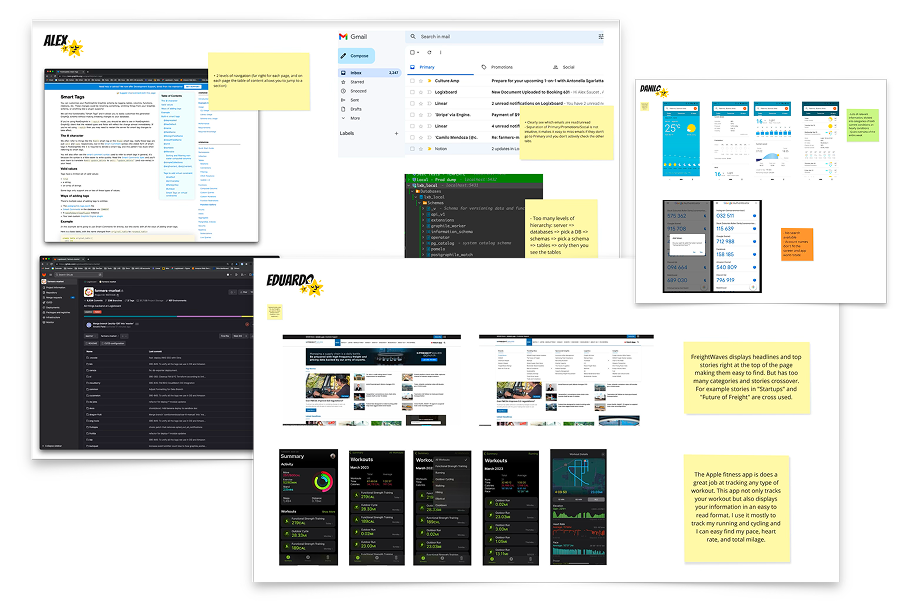
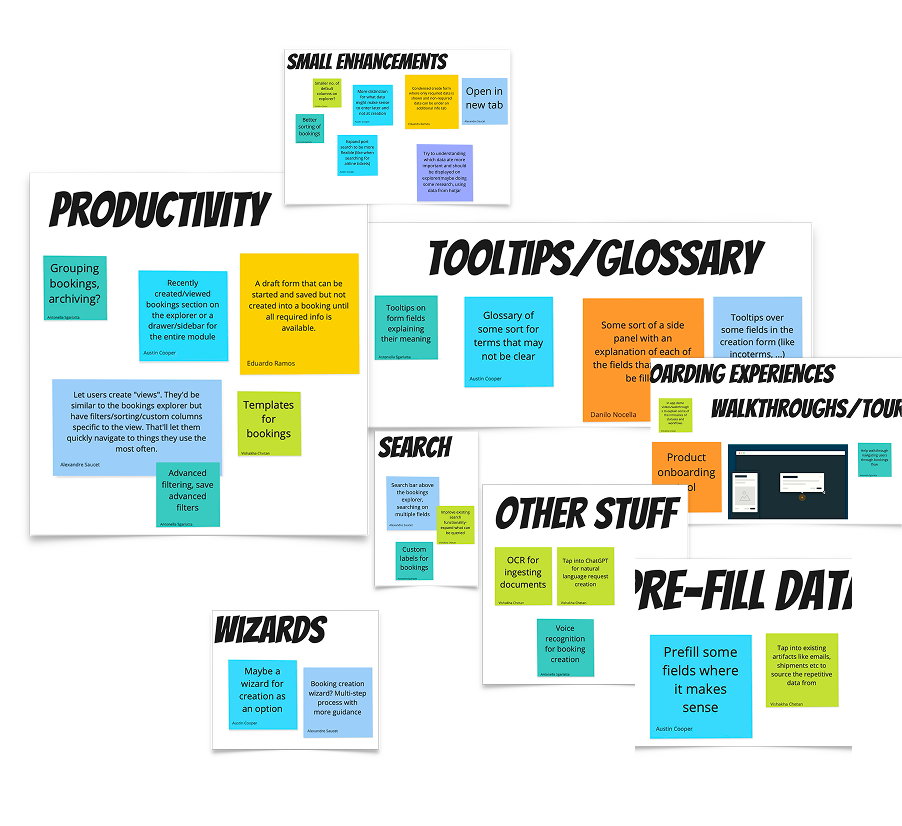
I led a workshop with customers and developers with a simple goal: identify which digital experiences handle data ingestion well in real life, and what of that could be added to the LogixBoard platform.
 (view larger)
Buildable Ideas
Working with product management, we identified a few viable candidates to build. In prioritized order, these were:
1. Pre-fill information from existing shipment and/or bookings
2. Introduce bulk importing to alleviate manual re-entry from spreadsheets
 (view larger)
In-app experience
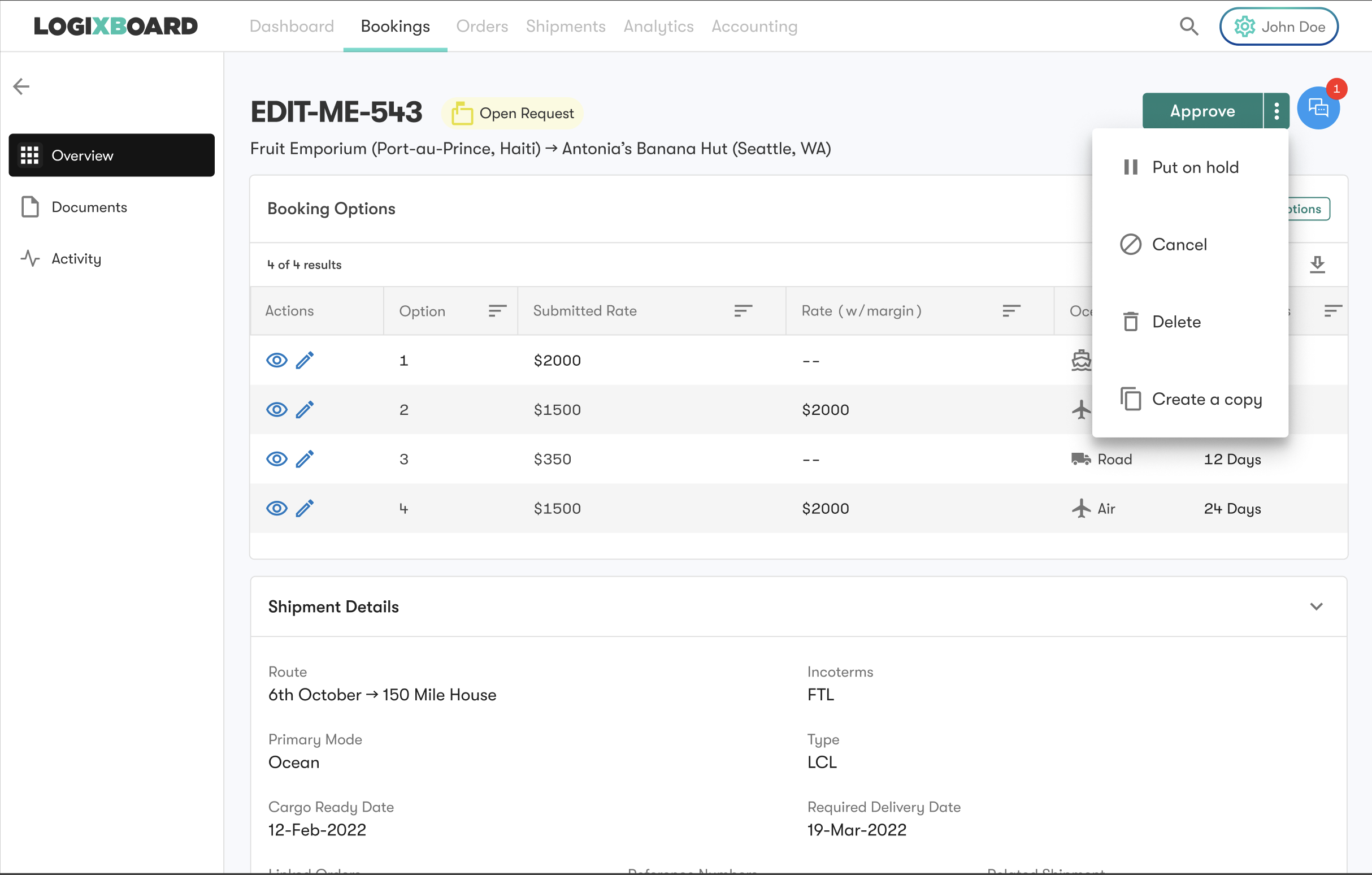
01 Duplicate
LogixBoard contained a ton of reusable information in the form of Shipments, and now, Bookings. Adding a mechanism to copy details reduced friction caused by reentering existing data.
-
 (view larger)
The Duplicate action on a booking -
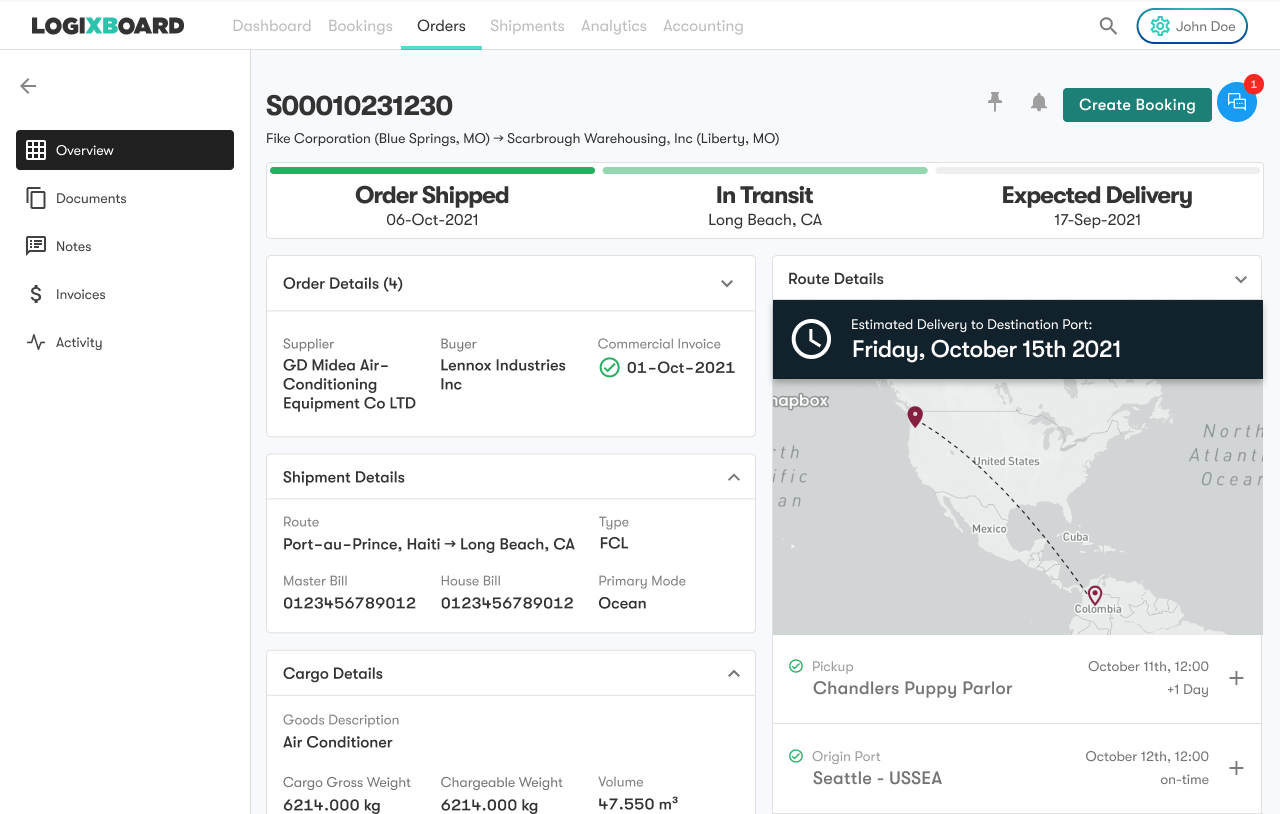 (view larger)
Creating a booking from a shipment
02 Bulk Import
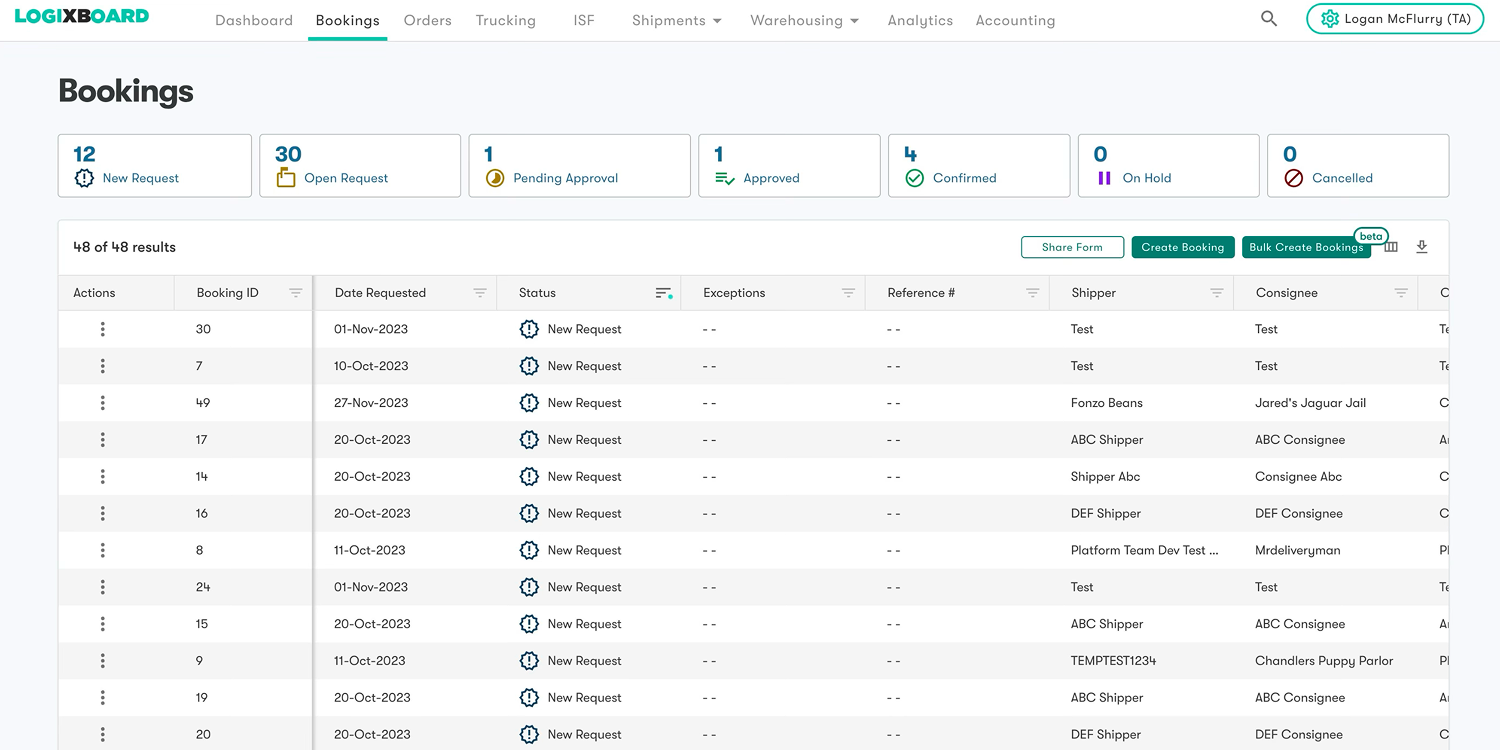
Throughout the year, LSPs experience large volumes of booking requests from the same customer for seasonal items. Given the overlap in information amongst these requests, we introduced a simple CSV import mechanism to help speed up the data entry process.
-
 (view larger)
1. Added a “Bulk Create” button on the bookings index -
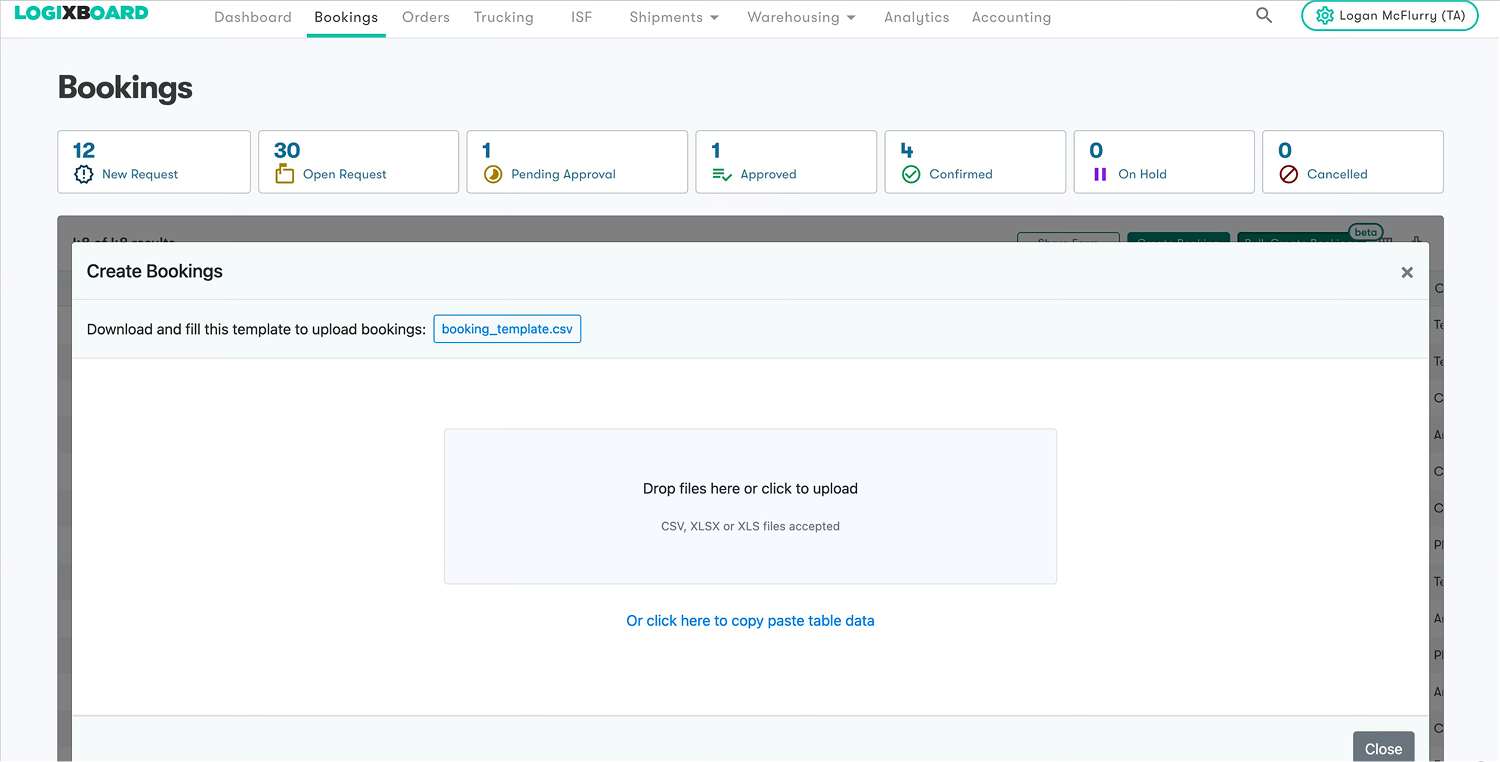 (view larger)
2. A fillable CSV template was provided to help users understand the format and structure of the data -
 (view larger)
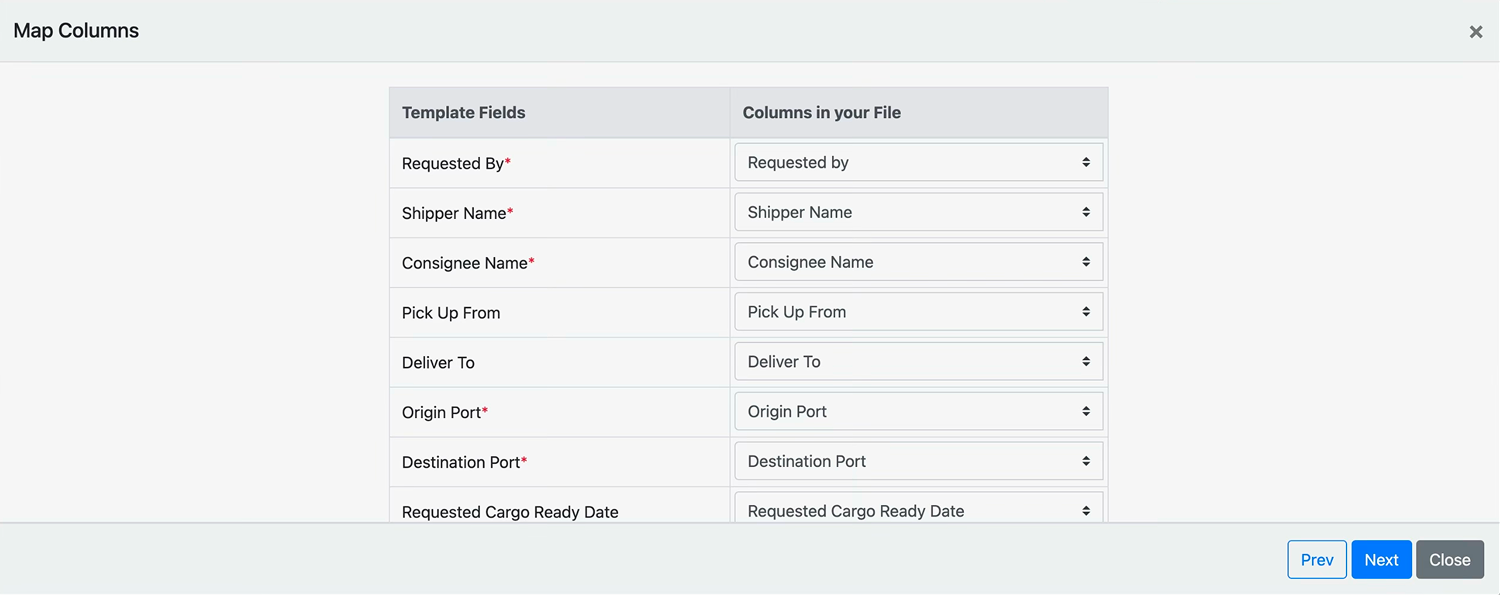
3. Mapping CSV fields to the booking form -
 (view larger)
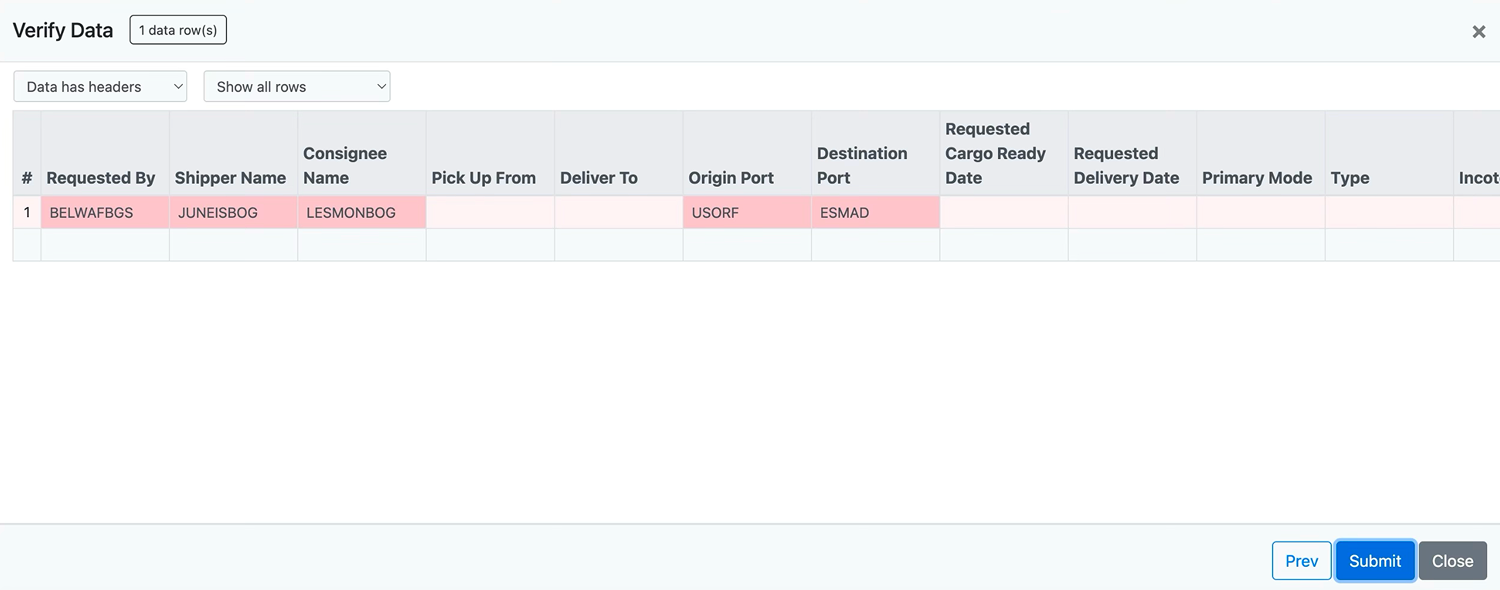
4. Review and correct the imported bookings
Results and next steps
MVP Release
22%
Reduction in time to confirm a booking
20 CSV Uploads
Per account using Bookings
100-250 Bookings
Imported using Bulk Import
Next Steps
Orders
Customers were vocal about needing an Orders module to service Bookings data effectively.
Inventory Management
With Bookings and Shipments squared away and functioning seamlessly, the next opportunity was tackling Inventory management.
Inventory Management →Reflections
01
Beta to launch in 3 months is undoubtedly “trial by fire”, especially when its the first 90 days of a new employee.
The partnership with a product manager has never been more important and wieldy than it had been during this project.
02
Team process and context matter.
My team, Bacon Pancakes, agreed to work off of lo-fi designs first, and only create hi-fi prototypes when absolutely necessary. This allowed me to stay in lock-step with the product manager and customers, which in turn, helped me design experiences that required minimal revisions.
03
Understanding IRL processes of the user will always be more informative than an internal SMEs best guess.
04
Modularity and integrations require in-depth, thorough and extremely well vetted mapping. Without the exercise to understand what data we’re ingesting, displaying, and building relationships for, a cohesive experience in LogixBoard would have been impossible.